When I first visited Selfridge with my father, they flew these F-4 "Phantom" jets on week-ends. We'd sit outside the north perimeter fence as they took off and they'd go right over the top of us, so close that we could have hit them with rocks had we not been deafened by the noise and choking on kerosene fumes. It was fantastic.

Air superiority, ground attack, from land or from carriers, the McDonnell Douglas Phantom could do it all.

The Navy Reserve flew these little A-4B "Skyhawks" in the late 1960's and early 1970's. It was the smallest jet capable of carrying a nuclear weapon. John McCain flew one of these when he was a pilot.
 The Blue Angels used to fly the hell out of these. I think that they were better back then than they are now, because they could do more close-in stuff with these than they can with the larger F-18s that tey currently fly.
The Grumman F-14 "Tomcat" was intended to replace the Phantom as an all-weather carrier-based interceptor. OK, maybe it did, and maybe it was fast and agile and powerful like the Phantom, but could it deliver bombs in a close air support role? Nope. And that's why there will always be but one Phantom jet.
 The F-14 was a great plane itself though. It was a sad day when the Navy retired the last ones in 2006.
 The F-14 may have been replaced in inventory by the F/A 18, but like the Phantom jet, it'll always be remembered as having been in a class by itself. It breaks my heart to think that the retired aircraft were all deliberately destroyed to keep Iran from somehow getting any of their components.
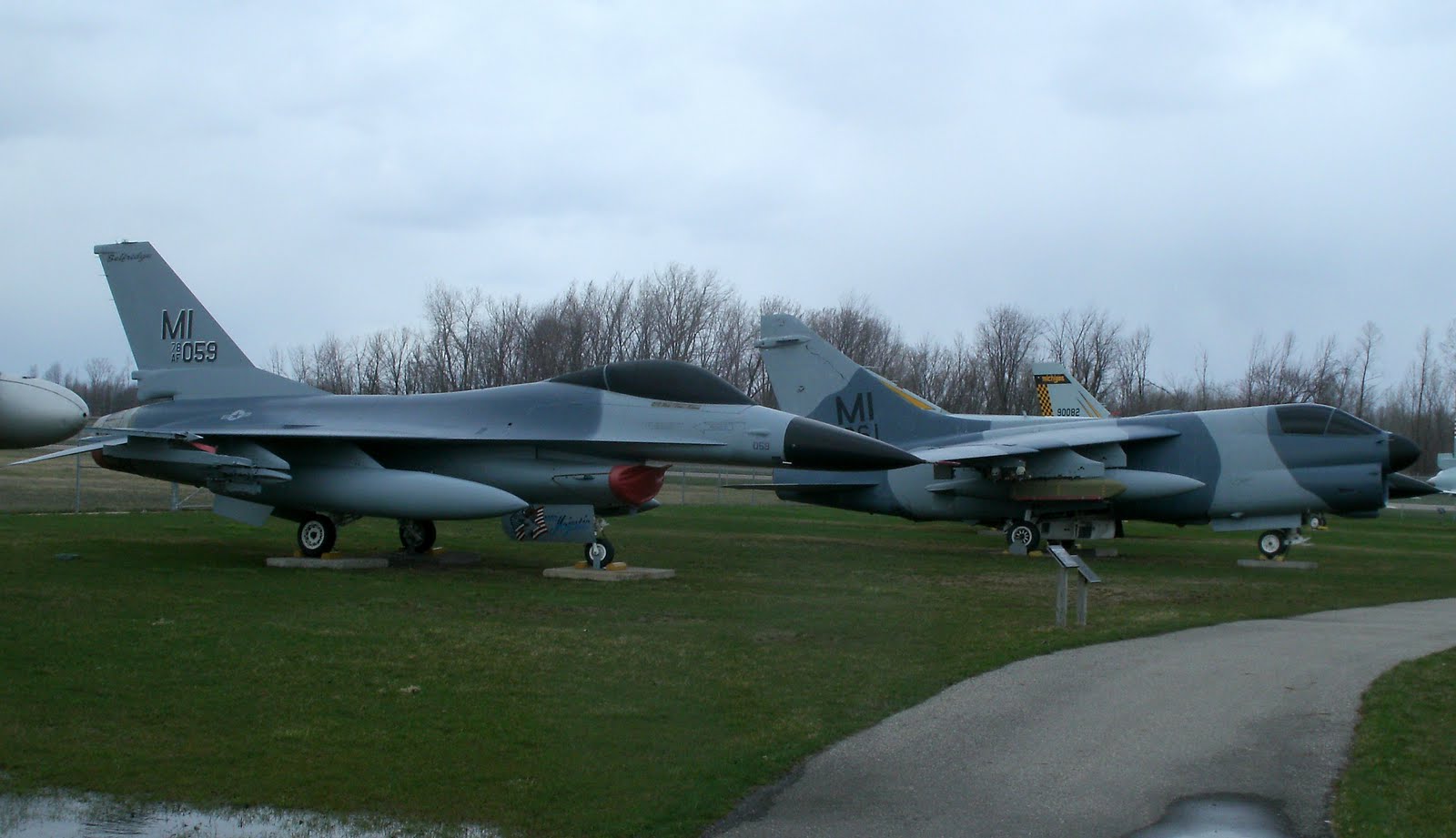
The Selfridge Phantoms weren't replaced by the F-14. They were replaced by the General Dynamics F-16 "Falcon" and the LTV A-7 "Corsair II". Here's the F-16:

I've watched these fly from Selfridge and other fields. They're sharp, but they just lack that authoritative Phantom roar. Still, the Thunderbirds make good use of them.

And this is the LTV A-7, an all-weather attack aircraft.
 The A-7 flew in Vietnam, and continued on in service until it was removed from the fleet in 1981. By 1988, even the ones flown by the Guard were retired.
Here's the F16 and A-7 together. They make a great pair, don't they?
This is what the 127th Wing flies now--the A-10 "Warthog"
 Originally designed to combat Eastern Bloc armor, it's found many new uses as a close air support aircraft in Iraq and Afghanistan and older models are still being rebuilt and redeployed.


